How Micro-Nano Fabrication Will Shape Tomorrow's Tec
What do 5G base stations, AI chips, and mRNA vaccines have in common?
They all rely on structures smaller than a red blood cell — built by micro-nano fabrication.
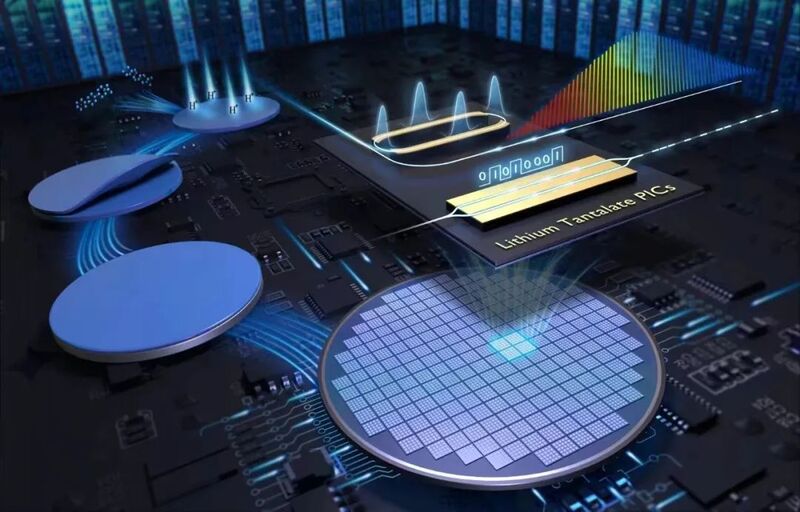
Micro-nano processing goes beyond merely "making objects smaller." It involves precise manipulation of materials at the micron (µm) and nanometer (nm) scales—approximately one hundred thousandth the diameter of a human hair.
Three core processes:
Lithography defines the blueprint. From ultraviolet to extreme ultraviolet (EUV) light, we etch patterns as small as 3 nm—equivalent to 30 silicon atoms arranged side by side.
Etching and carving structures. Dry etching (ICP/RIE) achieves a selectivity ratio of over 50:1, enabling precise carving on GaN or SiC without damaging adjacent layers.
Extensive atomic-level growth. What are the achievements of MOCVD in constructing quantum wells with an accuracy of ±1 atomic layer?
The result? Photonic chips that transmit data at light speed. MEMS sensors weighing micrograms. Neural probes thinner than a neuron. Micro-nano fabrication is the bridge between physics and product.
What's the smallest feature you've ever designed or inspected?